I've noted during the brief existence of this blog that I've developed something of a bully pulpit towards Christianity. And that's..pretty unfortunate. Kinda. Then again, if many of its followers weren't so adamant at shoving their beliefs down everyone's throats, I wouldn't make such an issue about it. Even with Western culture behind them, and a following of 2.2 billion, many of its advocates still find reason to spread the religion everywhere. And that's despite the fact that a key part of the religion is its eschatology: that a chosen faithful few (possibly 144,000) will ascend to Heaven to be with Jesus after the Last Judgment, while the rest burn in the deepest pit of hell for eternity. This eschatology, mind you was likely believed to occur during the life of its supposed author, John of Patmos. But that never stopped the spreading of the stories within the Bible across the world, and its application as if they were real. And it certainly didn't stop the development of several methods of emotional blackmail and exploitation of deep-seated fears to gain more followers. Although I have say there were some pretty bad arguments for Christianity. And so, for this New Year's, allow me introduce you to the concept of spiritual death. Which is...arguably the saddest argument for Christianity I've ever come across.
So to explore spiritual death, we have to explore the concept of the spirit, or the soul. It's used interchangeably (although not the last time I came across it). The spirit was (and is) believed to be part of the soul; an incorporeal essence which all living beings are said to have, and in the case of religions such as Christianity, Islam and Hinduism are immortal, and as such,a re the only parts of our existence which will survive death. The Hebrew beliefs about the soul are that God give out souls by "breathing life" into humans as stated in Genesis 2:7: "And the LORD formed man of the just of the ground, and breathed into the nostrils of the breath of life; and man became a living soul.". Now, the ancient Hebrews did not believe in any sort of an afterlife. Which is why Yahweh's punishment for various offences in the Old Testament, were "simply" described as death. And an often horrible one at that. However, Hellenistic thought which influenced Christianity, introduced the concept of the soul and/or spirit to the Abrahamic religion, and an existence even surviving death became a key part of its doctrines. And to prove it is in fact, Hellenistic thought, let me give a brief outline of the dynamic between the body the soul, or the material and immaterial world according to Platonic thought.
According the Plato, the material wold is an illusionary construct, with the real world being the World of Forms. These 'forms' are idealised and perfect versions of all things, that we only see replicas of in this material world through outlines. e.g. we see several dog breeds and species of the dog family, so there must be the "Form of the Dog", there's also the "Form of the Human", the "Form of Colours", and as the ultimate source, the "Form of the Good". The body, being material, according to Plato cannot access universal truth, experiencing only shadows, but the soul can experience the former, and will only fully do so once you die.
Compare this to Christianity; You aren't your body, you are your soul. Your soul is given to you to the ultimate spirit, God. You, as in your soul, exists inside a material body, and once you die after you live as a Christian, go into Heaven; a place forever united with God, in a blissful existence. Only there's a figure involved with this transition: it's Jesus Christ.
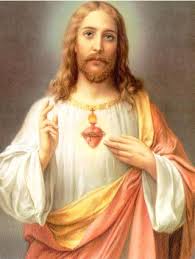
John 3:16: "For God so loved the world, that he gave his only begotten son, so that he that believe in him, shall not die, but have everlasting life."
Romans 2:7: "To those who by persistence in doing good seek glory, honour and immortality, he will give eternal life."
2 Timothy 7-10: "So do not be ashamed to testify about our Lord, or ashamed of me his prisoner. But join with me in suffering for the gospel, by the power of God, who has saved us and called us to a holy life-not because of anything we have done but because of his own purpose and grace. This grace was given us in Christ Jesus before the beginning of time, but it has now been revealed through the appearing of our Savior, Christ Jesus, who has destroyed death and has brought life and immortality to light through the gospel."
But this is where Christian evangelists shoot themselves in the foot, by introducing spiritual death: The concept that even if it's immortal, your spirit or soul can die if you've been naughty. So where does this concept of spiritual death come from? Well, those who refer to it often cite these passages:
Genesis 2:16-17: "And Yahweh commanded the man, saying, of every tree of the garden, thou mayest freely eat. But of the tree of good and evil, thou shalt not eat of it: for in the day that thou eatest thereof thou shalt surely die."
Genesis 3:8-9: "And they heard the voice of the LORD God walking in the garden in the cool of the day: and Adam and his wife hid themselves from the presence of the LORD God amongst the trees of the garden.
And the LORD God called unto Adam, and said unto him, 'Where art thou?'"
Mark 15:33-34: "And the sixth hour has come, there was darkness across the whole hand until the ninth hour. And at the ninth hour, Jesus cried with a loud voice, saying, 'Eloi, Eloi, lama sabachtani? (My God, My God, why hast thou forsaken me?)'"
Ephesians 2:1: " And you He made alive, who were dead in trespasses and sins"
Ephesians 4:18: "They darkened in understanding and separated from the life of God because of the ignorance that is in them, and hardening of their hearts."
Colossians 2:13 "When you were dead in your sins and in the uncircumcision of your sinful nature, God made you alive with Christ. He forgave all your sins."
There's also some other stuff in Revelation about a "second death", which I'm not even gonna touch with a stick, since Revelation was written by someone who seemed like he was having a bad trip.
Most of the passages look like they have fuck-all to do with spiritual death when read at face value. Which is weird because many of those who use this doctrine are fundamentalists and Bible literalists, which more or less, exposes their hypocrisy.
Firstly, I'm rather familiar with the Adam and Eve tale, as I'm pretty sure that God claimed they'd literally die, but Adam went on to live to 930. That story also had a talking snake (later retconned to Satan) but that's neither here, nor there. I would've thought that extrapolating from that story (despite its obvious glaring flaws) that death was meant in a physical sense, and Adam and Eve were originally immortal, but cursed themselves, if they really wanted to reconcile their extended age and God's warning. But many go with spiritual death as an explanation. Oh well.
Also, God's omniscience somehow seems to be limited to "spiritually alive" people by this logic. Which is weird because how could God smite people if he can't see sinners/'spiritually dead' people?
Jesus during his crucifixion upon taking in the sin of humanity, well, he actually made himself a substitute for Judgment against humanity, notes God's absence. Apparently since he's taken in all the sin, He's probably "super-spiritually dead", which is somehow possible if you're God and the greatest human to have walked the earth.
The last three address "spiritual death" (kinda). I'm more inclined to think that Paul of Tarsarus when he wrote this, didn't mean people's spirits/souls are literally dead, but have such a new life in Jesus, their "past life" might as well have been dead, hence the term "born again". Then again, since it's wonderfully misanthropic, he may have meant it. It may highlight how much better life under Christianity is, so it would be used as a good tool. In any case, compare notions of the spirit with the most important organ within the human body: The brain.
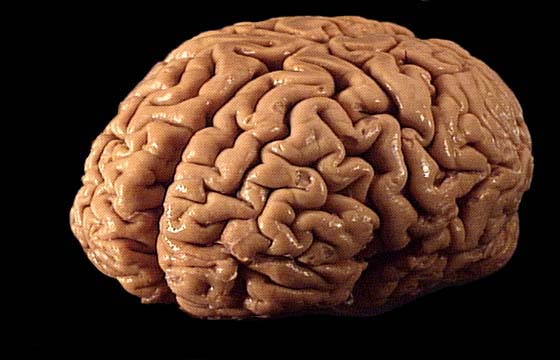
The brain is the centre of the central nervous system and the organ which co-ordinates sensory input, motor activity and behaviour. I'll come on to that latter in a few moments. The largest part of the brain; the cerebral cortex, can be split up into two halves: the left and right hemisphere, which can be further split up into four cortical divisions: the frontal lobe, the parietal lobe, the occipatal lobe and the temporal lobe, with the cerebellum joining the two hemispheres. While initially believed to be just another organ, over the past few centuries, it's been understood that our intellect, or rather our cognitive faculties are produced by the brain, specifically the cerebral cortex. For instance, Paul Broca's research into speech recognition led to the discovery of the area of the brain responsible for speech, by performing an autopsy of a boy nicknamed "Tan", because the only word he was capable to saying was "tan" due to a speech disorder; who died from syphilis. It was discovered that boy had lesions in a specific area of the brain, now referred to as Broca's area, located in the parietal lobe.
Also, in recent times, notions such as personality or self, and ultimately the consciousness, have received good supporting evidence for the explanation that they are products of the brain. With the former, the example of 19th century rail-road worker Phineas Gage, who in an accident had a iron rod rocket through his skull. While miraculously surviving (and I mean miraculous in a fairly loose term considering what happened to him), he turned from a polite hard worker, to a rude irreverent drunk. In other words, the life story of Barney Gumble, with a pole-blasting-through head misfortune. This seems to challenge any idea of a fixed persona called a "soul" or "spirit".

As for the latter, the link to this documentary shows an experiment which causes a critical wound to any Cartesian notions of mind-body dualism...by showing what one would look like, and giving a physicalist explanation for it. Death is clinically recognised as the cessation of electrical activity in the brain. Technically, everyone dies of "brain death", be it an elderly person suffering cardiac arrest resulting in a lack of oxygen and nutrients to the brain, or a gunshot wound to the head, resulting in brain death, it's same diagnosis. Brain death when the entire brain, including the brain stem, irreversibly loses all function. This is not to be confused with a coma or a persistent vegetative state, in which there is some degree of brain function going on. Even in the latter, the reflex activity demonstrated is brain activity. Brain death does not feature any activity at all, or responses from the victim. Once the 100 billion neurons stop firing, that's all she wrote. Thus, brain death is the true physical death. While the brain is still a very mysterious organ, we can measure activity within the brain, and we can identify which parts of the brain are responsible for which specific functions. Which is more than I can say for the soul, which is utterly unfalsifiable, let alone any specific function for this immaterial concept. So it's funny when people speak to me of "spiritual death". So, if you were attentive enough with this post, let's have a little fun with this:
General beliefs of Christianity:
- God is the creator of humanity
- Humans (and for whatever reason, not other animals) have immaterial, immortal 'selves' called souls, or spirits.
- Our souls/spirits are our true selves, and merely attached to the biochemical machinery we call the body, including the nervous tissue known as the brain.
- Therefore, our immaterial souls/spirits, are distinct from our material brains.
- Thus, it is all the more important that Jesus is accepted as personal saviour, having immortal souls/spirits.
- Your immaterial, immortal soul/spirit can be killed by a single act ofsin (vaguely defined as whatever God doesn't like), or perhaps more shockingly, a poor diet. In Adam and Eve's case, the two were one in the same.
- Despite the soul or spirit specifically stated to be immaterial, the ailment or affliction of "spiritual death" is hereditary.
- Therefore, Adam and Eve's "spiritual suicide" had grave consequences for humanity.
- Because you are "spiritually dead", it is therefore necessary that you are saved by Jesus.
- However, all decisions until then, are undertaken by the brain, being that your real self, the soul or spirit, is dead.
- Thus, your soul attached to the biochemical machinery known as the body, dead, with less usefulness than the pancreas within the human body (which has some use).
- You can make your soul alive again, by accepting Jesus as your saviour. The exact mechanism of this is conspicuously not defined.
- Even accepting Jesus, which according to Christianity, is the most important decision of your life, or even 'eternal' existence (as if the latter has any meaning) is ultimately performed, by the brain.
- Therefore soul < brain.
An even more bizarre implication, which I wouldn't peddle too much is:
- The moment Adam and Eve ate the fruit and 'killed' their souls/spirits, they became (more) self-aware or self-conscious.
- Therefore "spiritual death" = (A heightened sense of) self-awareness/self-consciousness (WTF!?)
Girl: "Oh my God, he's dead!"
Guy: "Damn! He got killed so horribly, his spirit died!"
Also, the notion of "spiritual death", if real, would mean that mangaka Tite Kubo was on to something when writing Bleach:
 |
| With "spiritual death", suddenly bleeding, receiving injuries and suffering from tuberculosis in the afterlife makes sense. |
In any event, Happy New Year readers, and please, if you haven't already, make using your brain your New Year's Resolution.

No comments:
Post a Comment